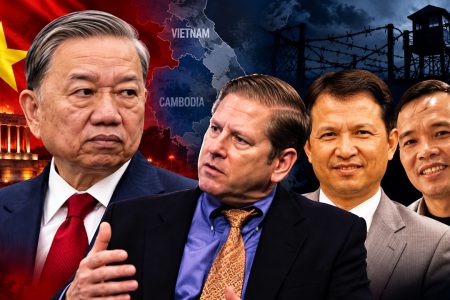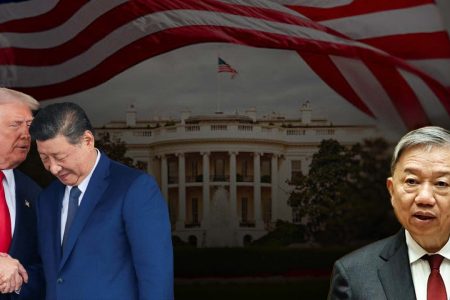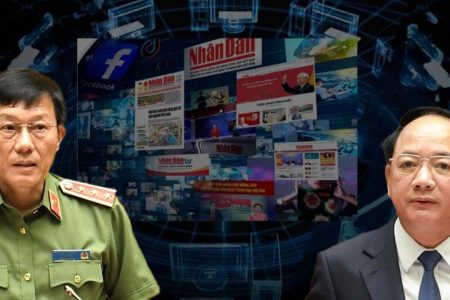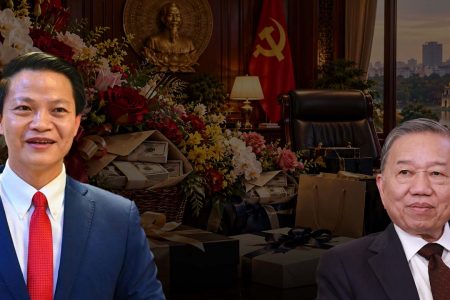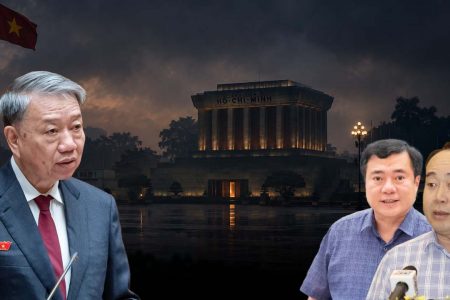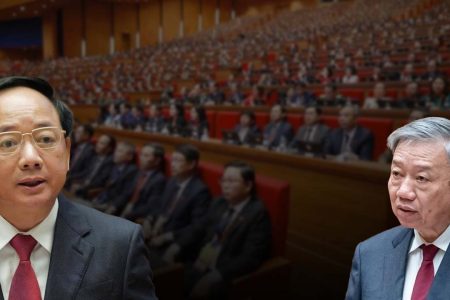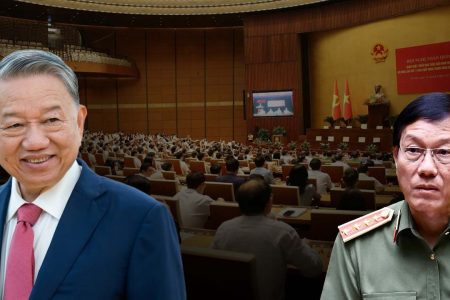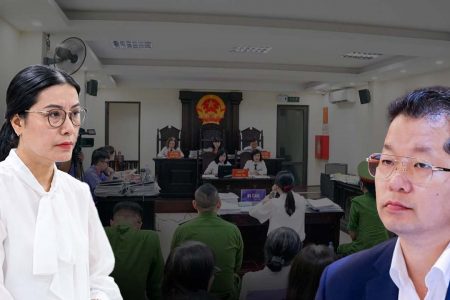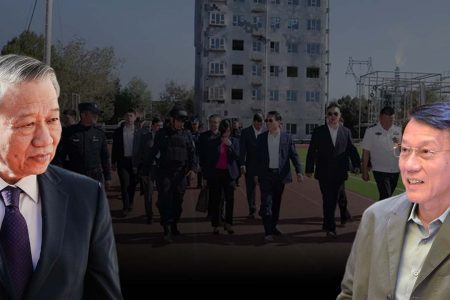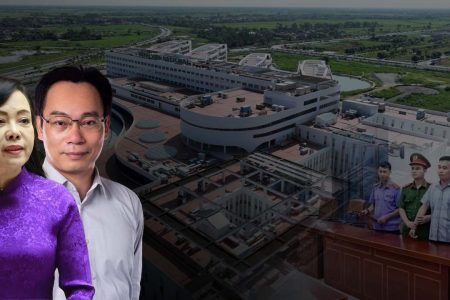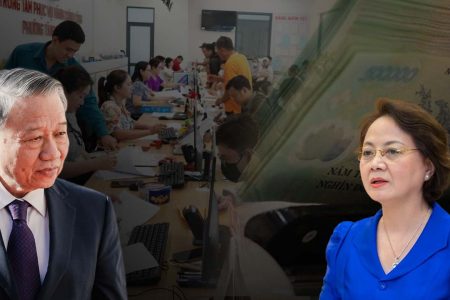
These days, the power center in Ba Đình is being engulfed by the heat of a historic, no-holds-barred political showdown—one whose outcome will completely reshape Vietnam’s power structure.
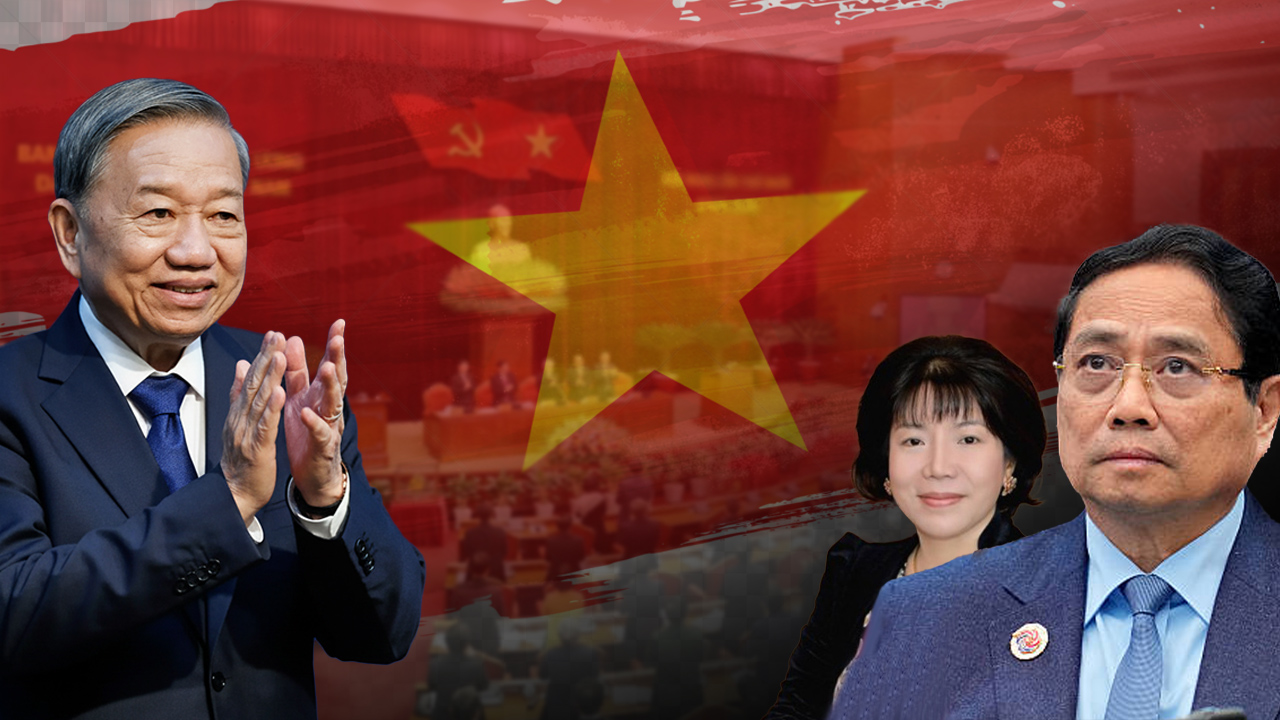
Although the 14th Party Congress is officially scheduled to open on January 20, 2026 with all the solemn ceremony, international observers have long judged that the political fate of Prime Minister Phạm Minh Chính is “hanging by a thread.”
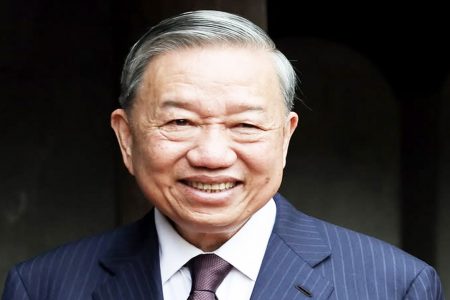
Chính was once dubbed the “last survivor” among the “four pillars” of the 13th term. But now he appears to be standing on the most precarious ground of his career, as General Secretary Tô Lâm—his biggest political rival—has just sent unmistakably decisive signals.
Specifically, General Secretary Tô Lâm signaled an impending purge right in his opening speech to the 14th Congress, with the hardline declaration that “all violations will be punished.”
According to AFP, Tô Lâm not only pledged to continue the anti-corruption campaign but also evoked Xi Jinping’s “tigers and flies” drive, with effective tools for eliminating internal opponents.
Observers immediately connected that message to the image of Prime Minister Chính, said to be sitting “dazed” on the Presidium with an anxious expression.
That anxiety is not unfounded, given Chính’s “Achilles’ heel”: alleged ties to Nguyễn Thị Thanh Nhàn and the AIC scandals dating back to his time as Party Secretary of Quảng Ninh—issues that have been, and continue to be, relentlessly exploited.
However, the decisive blow that has backed him into a corner did not begin on the opening day of the 14th Congress. It unexpectedly surfaced from Cà Mau in the final days of 2025.
The claim that Nguyễn Tấn Dũng moved to revive the AIC case right in the “holy land” of Cà Mau is presented as evidence that “Ba Dũng” has sided with General Secretary Tô Lâm to remove Chính and clear the way for a new power order.
This is portrayed as a carefully calculated move to fully isolate the sitting prime minister—turning the Nhàn–AIC case into a “mercy shot” to eliminate Prime Minister Phạm Minh Chính from the post–14th Congress power chessboard.
According to well-connected sources, ahead of the 14th Congress the confrontation between the two most powerful figures in Vietnam has moved past the probing phase into direct, fierce, uncompromising face-off.
No longer maintaining a soft defensive posture, Prime Minister Phạm Minh Chính is described as making strong counter-moves, publicly criticizing the police for shielding smugglers and questioning the “fighting will” of the so-called “Hưng Yên Ministry.”
This is framed as a direct declaration of war against the police faction that serves as Tô Lâm’s power base. In response, the Ministry of Public Security is said to have “retaliated” by arresting a series of key figures in Thanh Hóa—Chính’s political stronghold.
Although Prime Minister Phạm Minh Chính is reportedly trying to cling to a diplomatic “shield” through major infrastructure projects in cooperation with China—seeking to borrow Beijing’s influence to protect his position—
General Secretary Tô Lâm’s decision to “sacrifice” the North–South high-speed rail project is portrayed as a tactic that has turned Chính’s dream—already suspected of entailing political dependence on Beijing—into smoke.
Meanwhile, the personnel chessboard for the new term appears to have been settled, with Lê Minh Hưng positioned to take over the premiership. This further reinforces the view that Chính being “put on the chopping block” after the 14th Congress is hard to avoid.
In short, removing Phạm Minh Chính is presented not merely as an issue of Party discipline, but as a necessary step for General Secretary Tô Lâm to “make an example” of lingering seeds of resistance within the Party and to consolidate absolute power for the Hưng Yên bloc.
Trà My – Thoibao.de