The United States and Israel have just carried out a large-scale coordinated attack on Iran, killing Supreme Leader Ali Khamenei along with dozens of other senior regime officials. Tehran is in chaos, a 40-day period of national mourning has been declared, and the world is witnessing an unprecedented blow to the center of Iran’s power. In that context, an undeniable reality is unfolding in Vietnam: some senior leaders are afraid, even though they have not done anything as extreme as Iran has.
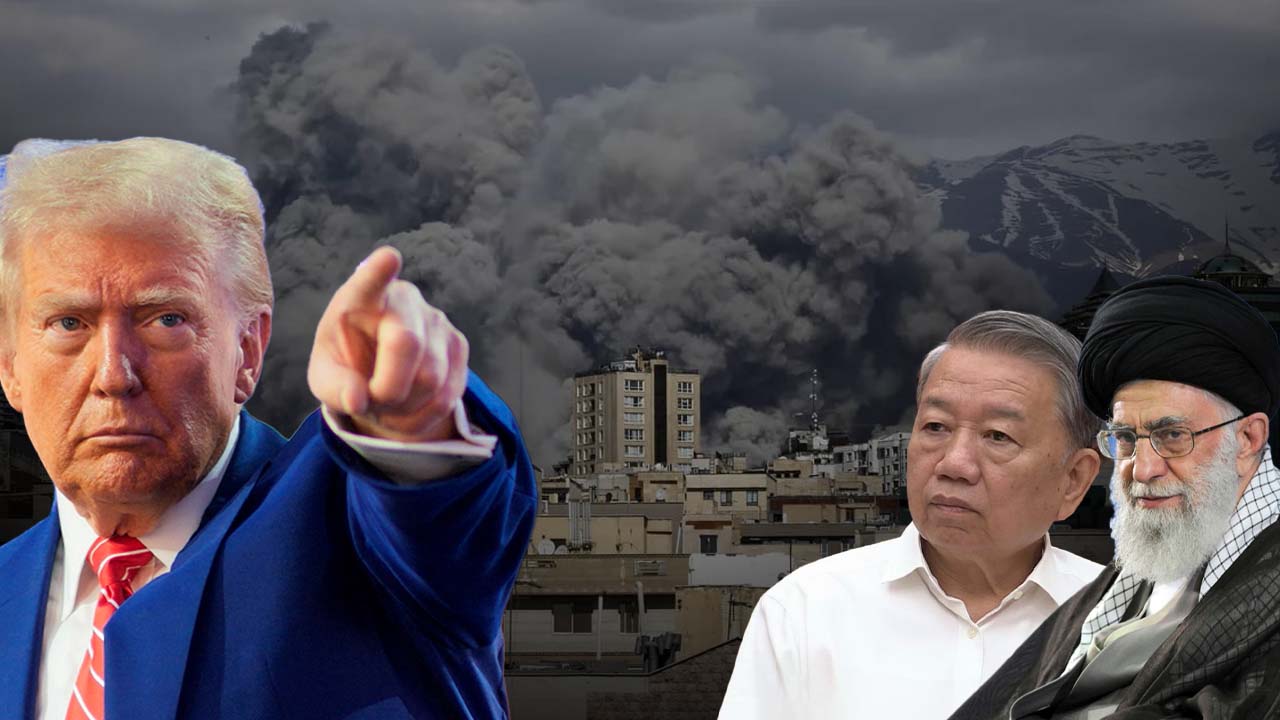
Vietnam is a covert dictatorship—not as openly so as Iran, with its Supreme Leader and Revolutionary Guard, but with power still absolutely concentrated and with tight control over the media, public opinion, and society. The U.S. did not attack Iran simply because it is “authoritarian,” but because of nuclear issues, oil, and direct threats. However, the image of American drones killing a supreme leader, with a series of top generals dying in just a few days, has created a powerful psychological effect. Those at the very top in Vietnam cannot help but ask themselves: if the U.S. decided to “teach a lesson” in a similar way, would anyone be safe?
They are worried not because Vietnam is directly confronting the United States—the current relationship is even a comprehensive strategic partnership, with close economic ties. They are worried because of the nature of the regime itself: highly personalized power, a lack of real checks and balances, and a system that could easily be viewed as “dictatorial” in Western eyes if circumstances change. Iran once believed it was untouchable, backed by its powerful Revolutionary Guard system, yet just one coordinated campaign wiped out its top leadership. In Vietnam, although there is no direct conflict, historical memories of war and geopolitical pressure are making some people begin to feel uneasy.
Make no mistake: Vietnam is not Iran—it is not isolated, not suffering a severe economic crisis, and not facing large-scale protests. But those very differences make the underlying fear stand out even more: if the U.S. once killed Soleimani, and now Khamenei along with many other leaders, then who can be certain about the future? Some Vietnamese leaders are afraid, not because they have committed excessive acts, but because they realize that in this world, no regime is truly untouchable once it becomes a target.
The events in Iran are a sharp warning. Vietnam continues to develop and integrate internationally, but the anxiety at the highest levels is real—even if everything appears calm on the surface. That is a reality that cannot be denied.
Tuan Thanh – thoibao.de