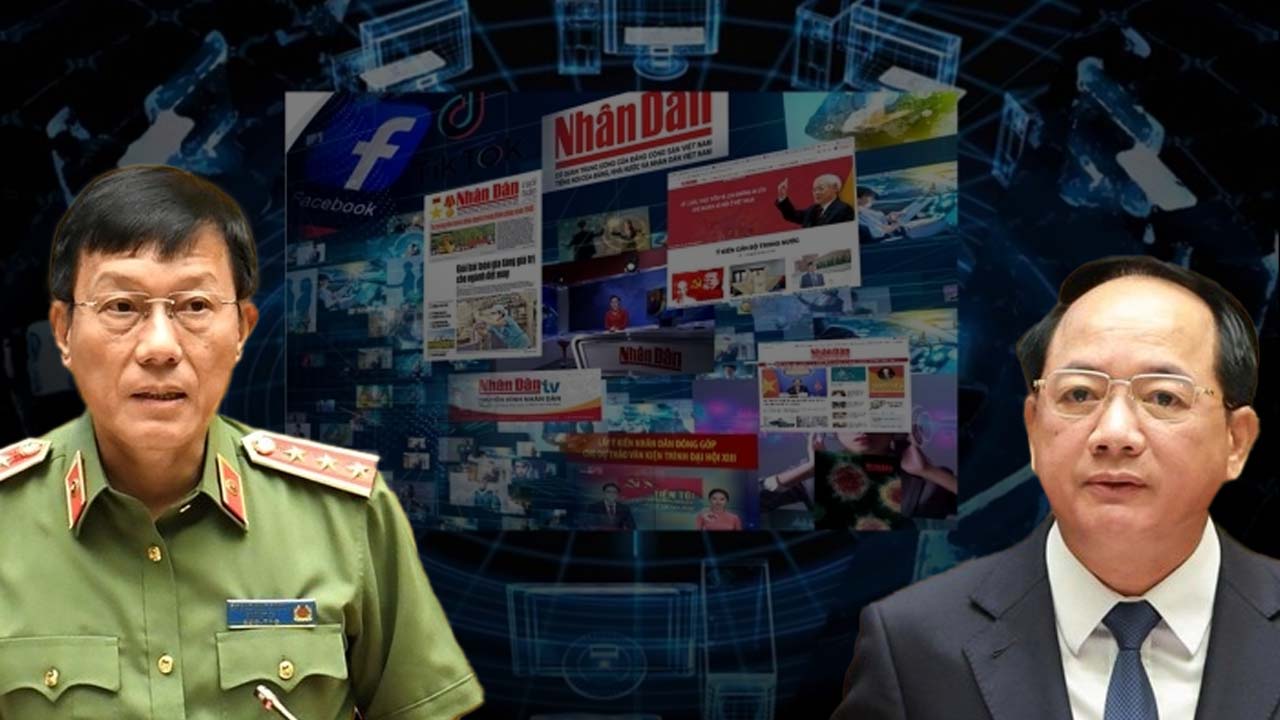
 It is no longer uncommon for state-run media outlets in Vietnam to frequently restrict or completely block comment features for both domestic and overseas users.
However, according to media experts, this is a proactive defense strategy aimed at safeguarding the consistency of official information and managing political risks in cyberspace.
The reason is that state-run media operate primarily as a propaganda tool, shaping public opinion according to the perspectives of the Party and the State, rather than following market mechanisms like multi-perspective media.
While readers overseas are not subject to the restrictions of the Cybersecurity Law like those in Vietnam, the social media pages of state-controlled media have opted to block or limit interactions to prevent critical opinions that are difficult for them to control.
At the same time, for domestic readers, the comment feature is strictly disabled whenever sensitive or socially complex events arise.
This technical measure is implemented to prioritize political stability and to nip debates that fall outside the control of state regulatory agencies in the bud. Furthermore, this crackdown becomes even more effective when viewed within the legal framework of the so-called Cybersecurity Law.
Accordingly, on the one hand, the law specifically prohibits certain acts—such as posting fake news, defaming individuals, or infringing upon national interests—thereby helping to protect users from the problem of information pollution.
On the other hand, however, these very strict penalties create a chilling effect that causes readers to self-censor, pushing citizens into a state of excessive self-restraint and caution—lest they face immediate punishment.
This will lead domestic readers to self-censor and become cautious when expressing critical views out of fear of inadvertently crossing sensitive legal boundaries.
At the same time, pressure from the Cybersecurity Law has forced cross-border social media platforms to cooperate in removing content, while media outlets have proactively tightened keyword filters or hidden interactions.
As a result, Vietnam’s cyberspace has shifted from a state of initial freedom of interaction to a strictly controlled environment, where discipline is prioritized but multifaceted critical discussions have been significantly curtailed.
Looking at other countries in the Southeast Asian region, we can see very different approaches to media regulation. Singapore has adopted a “velvet glove” approach, using sophisticated legislation to shape behavior rather than resorting to blunt bans.
Mainstream media outlets such as Channel NewsAsia and The Straits Times enjoy a public trust rating of over 70% due to their professional operations, even though Singaporean journalists are well aware that they must practice self-censorship.
Meanwhile, Thailand boasts a multipolar media landscape and greater civil liberties, but the press faces significant pressure from media conglomerates and severe political and legal risks.
Compared to Singapore’s model of guidance through smart legislation or Thailand’s volatile multipolar landscape, Vietnam maintains an absolutely centralized and unified management model.
Tightening control has made it easier for the state apparatus to maintain short-term information order, but in the long run, it creates a dangerous void in critical discourse.
According to experts, once the public no longer has space to express their thoughts or engage in debate on mainstream media platforms, people will naturally turn to unregulated underground spaces for discussion.
A truly strong media is not one that fosters absolute silence and fear, but rather a media system with the courage and credibility to engage in open dialogue with opposing viewpoints.
Trà My – Thoibao.de